Proverbs 19:21
Proverbs 19:21
Many are the plans go a man's heart, but it is the LORD's purpose that prevails.
Proverbs 19:21
Many are the plans go a man's heart, but it is the LORD's purpose that prevails.

Dan Merchant wonders, “Guys, guys [and presumably gals, too]—how are we supposed to have a conversation when everybody’s talking at once? Why is the Gospel of love dividing America?” Want to know why? Merchant decided to find out, so he donned a religious bumper-sticker-covered jumpsuit and set out across America in the documentary Lord, Save Us From Your Followers.
Along the way, Merchant meets Southern Baptists, apathetic Protestants, atheists, Al Franken, Catholics, homosexuals, Jim Santorum, a cross-dressing nun, and Tony Campolo calling Jon Stewart a “prophet of God” (referencing Tucker Carlson’s Crossfire on CNN, October 2004). He listens, asks, talks, pokes, prods. People critique his bumper stickers. They talk religion. In a conversation.
Merchant meets Ron Luce, leader of the national youth movement “Battle Cry” and discusses the “bee-hive” Luce and the event ran into in San Francisco. “Battle Cry” wants today’s Christian youth to speak out against the mass media culture that has turned America, a “Christian nation” according to Luce, into a culture opposed to Christianity. In San Francisco, “Battle Cry” staged a protest event on the steps of the San Francisco City Hall.
“It’s like we put our finger into a bee hive, and we didn’t know it—we didn’t realize it was a hotbed for a very violent response to people who represent the Bible,” Luce said.
This situation, according to Joe Garofoli, of the San Francisco Chronicle, put this Christian event on the same sacred steps for gay marriage, where the Mayor had decided to bless gay marriages just a few years ago. After the blow-up during the first event and plentiful press coverage, Luce brought “Battle Cry” back to San Francisco the next year, and again held a protest on the front steps of City Hall.
Merchant’s documentary opens with an animation of commentary from talking heads:
Jon Stewart: “Religion: it’s a powerful healing force in a world torn apart by… religion.”
Jerry Falwell: “We formed the Moral Majority. We weren’t intending to say everyone else is in the Immoral Minority.”
Merchant hit the streets and asked for the opinion of Americans on what Christians are all about: to be holy. Fanaticism. The Crusades. Killing off non-Christians. Trying to get other people to be Christians. Being good people That “love thy neighbor” thing. Theatrics. Jesus Christ. Being really snobby. Hypocritical. “Preparing to be holy, and being butt-[censored] wild behind closed doors. And that’s a fact.”
For Merchant, the trip began on a trip to Ethiopia, where he met Christians “full of joy, kindness and grace, despite living with daily hardships that would snap [him] in half.” That messed him up, he said, because he started to recognize the “stark contrast” between the Christians in Ethiopia, and the Christians he saw in America. “This collision of faith and culture in America—is killing me,” Merchant says. “It’s one thing to project our faith from a bumper sticker, it’s another to have a conversation. I think we’re getting it wrong again.”
Some will recognize this title from the book release. Lord Save Us has garnered attention from the Today Show and a USA Today Op/Ed piece. The film is available on DVD via group-screening license, by free download from the film’s website, or in a planned limited theatrical release June 13.
As documentaries go, Merchant and co-producer Jeff Martin produced a solid one. Both put their extensive television and film production experience to work, and through their production label hope to create more titles that express the spiritual truths of grace, redemption, and forgiveness.
The voices they include in Lord Save Us span the colors and faces of America and give a multi-sided voice to this commentary on Christianity in America. Politics and hot topics make up the early minutes of the film, while social justice and humility fill the later minutes. The film is also up-to-date, including footage of the Iowa Debates between Hillary Clinton and Barack Obama.
Through much of the film, there is a visual stimulation overload with animation, news clips, original interviews, talking heads, images, and music. Yet the representation implied is clear: there are many, many voices… and as Merchant noted early in the film, they’re all talking at once, and few are listening.

Five years later, Miller himself has moved on, as have many of the crowd’s favorite characters, including Tony the Beat Poet and Pastor Rick. The book had sold over one million copies, and the screenplay for “Blue Like Jazz: The Movie” is complete and ready for filming. Now, Miller revisits Blue Like Jazz with Jazz Notes: Improvisations on Blue Like Jazz, a remix version, giftbook style.
Miller’s story is riveting at times. His stories are vividly honest and he asks questions that other people of faith often avoid. He talks about the first time he sinned at the age of 10. He talks about his friend Laura, a pastor’s daughter and avid non-Christian, exploring God and the Bible. He tells the ever-popular story of setting up a Confession Booth at Reed College in Portland, a notoriously secular school, where he and his friends apologized for everything that Christians had done wrong.
Blue Like Jazz is one of those books that I read nearly a half-dozen times, and it was difficult to decipher the new material from the old in Jazz Notes. Even if you have read it a dozen times, Miller writes with a freshness that will grab you every time. Clips from Blue Like Jazz are woven together with Miller’s commentary, new stories, and updates on the original story. The book also features a CD of Miller reading excerpts from the audio book.
If you are really interested in Blue Like Jazz, I would recommend the entire book. If you’ve read Blue Like Jazz and know friends who would like it, or if you want just a quick read, pick up a copy of Jazz Notes. And stay tuned for “Blue Like Jazz: The Movie” and Let Story Guide You, Miller’s much anticipated new book due out later this year.
I just got a message on Facebook from my first youth pastor. I knew he had been working on a new project for a while, but didn't know what it was. He's been working behind the scenes on EverythingMustChange.org. I haven't had a chance to read Brian McLaren's new book, which the site is based around, but I've heard great things. Kind of exciting to know the behind-the-scenes guys...

Back in July 2007, Steven Furtick at Elevation Church in Charlotte, NC (The 8th fastest-growing church in America according to Outreach Magazine) preached a 5-week series titled "Confessions of a Pastor." This message was the 5th week and was preached by Shawn Wood, Weekend Experience Pastor of Seacoast Church.
We think of prayer like this:
What do we think about prayer? We don't know what to say. It's boring. We talk about the "weather" (you know, like people talk about the weather when they don't have ANYTHING else to talk about?). When it really boils down to it, how many of us would say we should pray more? But what if we didn't need to pray more? Maybe that's wrong. Bigger isn't always better. We live in a super-sized world where we want more, more, more. But maybe in our prayer lives, bigger [more] isn't better. Maybe better is better.
Ephesians 3:20-21:
Now to [God] who is able to do immeasurably more than all we ask or imagine, according to [God's] power that is at work within us, to [God] be glory in the church and in Christ Jesus throughout all generations, for ever and ever! Amen.
1.]Now to God...
My prayers are usually about me, but they need to be centered around God. It's kind of like Santa Claus prayers: here's what I want, I was good, so I should get them.
2.]...who is able...
It's about a God who can do big things. We tend to be boring people with boring lives who pray boring prayers. We have framed our prayers in terms of what WE can think up or imagine, but God is able to do so much more.
3.]...to do immeasurable more...
We need to believe that God can do what God is capable of doing.
4.]...throughout all generations...
When only God could possible do what we pray, "to God be the glory." We need to pray prayers that could change generations -- not just what our small, boring prayers could dream up. We need to pray prayers that can change a life, change a church and change a city.
Are your prayers boring? Stop praying small prayers.
 When our lives are rhythmically in tune with God, the music of our lives is played out to anyone around us who cares to listen. Maxwell “Wizard” Wallace (Robin Williams) says to young August Rush (Freddie Highmore), “[Music] is God’s reminder that there’s something bigger than all of us.”
August Rush grew up in a boys home, known as Evan Taylor. Separated from his mother, Lyla Novacek (Keri Russell), at birth by her over-protective father, both desperately wanted to know the other existed. Living a life of feigned existence and separation, neither pursued their shared passion for music. But an innate sense brought them back to music.
Evan begins the movie in a field, swaying in rhythm with the music of the wind saying, “I believe in music, the way that some people believe in fairy tales. What I hear came from my mother and father, once upon a time.” The movie also follows his father, Louis Connelly (Jonathan Rhys Meyers), working as a West Coast businessman, also avoiding his former life as lead singer of a band.
After Richard Jeffries (Terrence Howard) from the Department of Child Services checks in with Evan and the boys at the home, Evan decides that now is the time to find his mother. He sets off for New York City with nothing but the music of his soul.
When Evan first meets “Wizard,” he picks up a guitar for the first time and instantly shows off his musical prowess. “Wizard” wants to give Evan a new name, August Rush, and give him a platform to share his music. Sounds a bit like the Saul-to-Paul transformation in the New Testament.
 After police raid “Wizard’s” hangout, August is left wandering the streets of New York. He hears music coming from a church and wanders in to find a gospel choir in the midst of their practice. He finds Hope (Jamia Simone Nash), a young girl in the choir, who gives him a place to sleep, teaches him about music and introduces August to the minister.
Up to this point, Evan’s music came from the heart. He didn’t have a process or a structure or rules. His music came out of a childlike innocence, innocent and pure. Sitting at a piano in the church, Hope asks him, “Do you know your notes?” August is caught off guard: “I’ve never seen them like that before.” A childlike faith can be caught off guard in the same way when introduced to rules and regulations of religion.
August’s musical prowess took the minister’s breath away, and the minister found a way for August to attend Julliard. Learning how to write music, he composes a full-scale rhapsody which his professor discovers. The professor passes the rhapsody onto the Dean (Marian Seldes). She called August into a board meeting, where they informed August that they wanted the New York Philharmonic to play his rhapsody:
August: How many people will hear it?
The Dean: It will be performed in Central Park, on the Great Lawn.
August: A hundred?
The Dean: Much more. Thousands.
August: OK, I need to play it to a lot of people. Lots and lots.
Even with this newfound knowledge about music, August has not lost his passion and excitement. He wants nothing more than to share the music of his life with as many people as he can. What if people of faith lived with that same eagerness to share their passion?
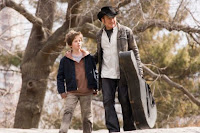 “Wizard” constantly reminds August of the importance of his music, its connection to his heart and the world around him: “You gotta love music more than you love food, more than your life and more than yourself...You know what music is? A harmonic connection between all human beings.” Our spirituality longs to be number one and that “music” in our lives will connect us to the world around us.
August asks “Wizard” where the music comes from: “I think it comes from all around you, really. It comes through us, some of us. It’s invisible, but you feel it.” August asks, “So only some of us can hear it?” and “Wizard” responds: “Only some of us are listening.”
Are you listening to the music this Christmas season? August found the music, lived the music and shared the music.
The music is all around us. All you have to do is listen.” - August
I don't normally listen to Christian radio. For whatever reason, though, I had the new local station on during my drive to class. After the morning's Scripture reading from the Book of Psalms, the anchor said, "And remember, Merry Christmas. With a capital 'C.'"
 Sunday morning in worship, during the epically-long greeting, the welcomer said, "Now we'll do something that you probably haven't done very much. And forget being politically correct. Say this after me, 'Merry Christmas.'"
This morning I received an e-mail, purportedly shared by Ben Stein on CNN (although it did resemble a lot of SPAM/urban legend-type e-mails: SNOPES says a variation is true). The message was from Ben Stein:
I am a Jew and every single one of my ancestors was Jewish, and it does not bother me even a little bit when people call those beautifully lit-up, bejeweled trees Christmas trees. I don’t feel threatened. I don’t feel discriminated against. That’s what they are -- Christmas trees.
I'm trying really hard to be "merry" this Christmas season. For the past half-decade (maybe longer), I have been bombarded with academic work in the days leading up to Christmas. It's been a struggle to find joy in that kind of a season! I still have class this year, professors are still assigning papers and exams, but I am trying hard. Then I realized that maybe my trouble finding joy is more about the "church" than about me.
Every time we turn around, someone else is fighting for "Christmas." Fighting? For Christmas? We can worship in our churches and celebrate with our families any way we want. Ben Stein said he's not offended. A quick history lesson:
In 1492, King Franz Ferdinand and Isabella finally "cleansed" the Spanish countryside of the last Muslims and the nation become solely Christian. What came after that? [Yes, fourth grade history wizards, Columbus sailed the ocean blue.] The Protestant Reformation came next right on its heels. The voice of a new kind of Christian that was not concerned with everyone worshipping the same way. This voice wanted to give everyone freedom of worship, and a separation of the Church and the state.
If the Church keeps fighting about Christmas, there will likely be a new Protestant Reformation. According to Phyllis Tickle, it will happen, if it's not happening already. Then maybe, just maybe, I'll be able to celebrate Christmas without hearing about a fight.

from Time Magazine's Quote of the Day

Two things make me really excited about this book. First, Donald Miller is writing another book. Second, it was inspired during the screenwriting for the new movie, "Blue Like Jazz." Let the countdown begin! It's going to be a long countdown though -- supposedly Feb 2008 for the book, and filming may start next summer for the movie.
One of our students recently had a friend ask:
If God loves people unconditionally, then how does God let people go to hell?
Tonight I was reading some of Augustine's stuff for class, and came across a couple interesting lines:
In this world, when the stuff that is considered evil is put in its place as evil, it makes the good look so much better, because good things bring greater pleasure and praise when compared to the bad things. The all-powerful God, who is acknowledged even by non-believers as the Supreme Power in the universe, would not allow any evil in his works, unless God could bring good out of that evil. What is evil except the absence of good?
...Then whatever defects are in a soul are just the absence of a natural good. When that defect is cured, the defect doesn't transfer somewhere else; they cease to exist because good overcame evil. Paraphase from CCEL
My mind doesn't churn very often when I read this kind of stuff, but this did. Maybe it's the real-life application. There's certainly nothing wrong with thinking every now and then...
When all else fails, sue...God?? A Nebraska state senator is.
Chambers lawsuit, which was filed on Friday in Douglas County Court, seeks a permanent injunction ordering God to cease certain harmful activities and the making of terroristic threats.
The lawsuit admits God goes by all sorts of alias, names, titles and designations and it also recognizes the fact that the defendant is “Omnipresent”.
In the lawsuit Chambers says he’s tried to contact God numerous times, “Plaintiff, despite reasonable efforts to effectuate personal service upon Defendant (“Come out, come out, wherever you are”) has been unable to do so..."
Chambers also says God “has manifested neither compassion nor remorse, proclaiming that Defendant “will laugh” when calamity comes.
And the truth: Ernie Chambers wants the state's lawmakers to legislate against frivolous lawsuits. Gone are the days when you can sue McDonald's for hot coffee. Or God for creating harmful activities and terrorist threats.
We spent a good three days with Tony Campolo in town last week. He had a lot of great ideas to share, and was incredibly down to earth. The first night he spoke on Becoming Red-Letter Christians. He gave a similar talk at the Youth Specialties' conference in the fall, but added a bit of Baptist jargon to this one. Second night he spoke on consumerism in America and its relation to true Christianity. I was on the worship team that led music for that worship service, and I had a chance to talk to Tony afterwards. The third day he spoke on the God of Love, as opposed to a god of power. Plenty to think about after the conference.

These online quizzes are sometimes a bit shady. However, I enjoyed taking this one and thinking about the questions as I went through. And I consider it a proud moment that I'm only 14% Fundamentalist...
You scored as Emergent/Postmodern. You are Emergent/Postmodern in your theology. You feel alienated from older forms of church, you don't think they connect to modern culture very well. No one knows the whole truth about God, and we have much to learn from each other, and so learning takes place in dialogue. Evangelism should take place in relationships rather than through crusades and altar-calls. People are interested in spirituality and want to ask questions, so the church should help them to do this.
What's your theological worldview? created with QuizFarm.com |

After hearing the professor outline the main points we probably should have included, and the style in which we should probably write, I edited a bit. Here's the second go...
My Gospel:Revised
God created each of us in the likeness of God, and through our relationship with Christ we are able to restore that likeness through our lives here in Earth. The Kingdom of God is not to be found only after death. To live and know God is to experience, believe and share in true community through the Kingdom of God, before and after death. To die and not know God is to miss out on this community.
When God sent Christ to the world in the form of a baby, God opened a new line of communication with the people of the world to give a message of love and forgiveness to the people. Coming as a baby, born of a virgin mother, Christ was the greatest example of innocence. As the child of God, Christ grew into a significant ministry experience that gave each of us an example by which to live.
While the down and out look different and have different names and job titles now, the example lived by Christ shows each of us how we should live our lives in order to best share God’s love with the people around us. Each of us needs to find and realize the “tax collectors” and “religious teachers” in our own lives; the people around us who are hungry and thirsty for nourishment, both literal and psycho-emotional. These are the people Christ touched, and they are the people we should reach out to. Christ did not stay within any one group of people. Christ reached out and loved all, no matter color, race, creed or religion.
When Christ was put to death on the cross, God made an eternal statement to all people. Christ said, “Forgive them,” to the people about to kill him. For God to forgive the murderers who killed Christ should represent for us God’s incredible gift of grace and love represented to us through the birth, life, death and resurrection of Christ. If we can take seriously the gift God gave to us and live to share that message with the people around us, we will hopefully spread the message of God throughout our land and around the world, making a difference in the lives of those who hear of God. And throughout the Bible, we understand the character of God leading up to Christ’s birth, allowing for future generations to put all the pieces together: to see God in the beginning, to see God as Christ is sent to Earth and to see the work of Christ and the early church as they attempt to share God’s message with the world.
This semester I'm taking a class entitled "Life and Work of the Pastor." Our assignment for Tuesday was to write our Gospel, or what we would share with someone as the essential elements of our Christian faith. The first attempt was a little rough, and I'm turning in the second draft which I'll post later. It's an interesting exercise, and hopefully at some point, each one of us will have a conversation where we share our Gospel with a non-believer.
My Gospel
When God sent Christ to the world in the form of a baby, God opened a new line of communication with the people of the world in order to communicate a message of love and forgiveness. Coming as a baby, born of a virgin mother, Christ was the ultimate in innocent life. As the child of God, Christ grew into a significant ministry experience that gave each of us an example to live by.
While the down and out look different and have different names and job titles now, the example lived by Christ shows each of us how we should live our lives in order to best share God’s love with the people around us. Each of us needs to find and realize the “tax collectors” and “religious teachers” in our own lives; the people around us who are hungry and thirsty for nourishment, both literal and psycho-emotional. These are the people Christ touched, and they are the people we should reach out to. Christ did not stay within any one group of people. Christ reached out and loved all, no matter color, race, creed or religion.
When Christ was put to death on the cross, God made an eternal statement to all people. Christ said, “Forgive them,” to the people about to kill him. For God to forgive the murderers who killed Christ should represent for us God’s incredible gift of grace and love represented to us through the birth, life, death and resurrection of Christ. If we can take seriously the gift God gave to us and live to share that message with the people around us, we will hopefully spread the message of God throughout our land and around the world, making a difference in the lives of those who hear of God. And throughout the Bible, we understand the character of God leading up to Christ’s birth, allowing for future generations to put all the pieces together: to see God in the beginning, to see God as Christ is sent to Earth and to see the work of Christ and the early church as they attempt to share God’s message with the world.
The most alarming aspect of Academy Award-nominated Jesus Camp is the indoctrination of children at an incredibly young age. Mike Papantonio, a political radio show host, confronts Becky Fischer with this realization during their on-air interview.
Becky, the leader of the Jesus Camp, was Children's Pastor for Word of Faith Church and Outreach in Bismarck, ND, before focusing her efforts full-time on Kids In Ministry International. Their ministry goal through workshops and training events for parents and leaders is to empower children to be all that God has for them to be. Through the camps of Kids In Ministry, the film shows these children being taught God's warfare in this world, and the supremacy of America as God's country. In one scene, a leader raises up a life-size cardboard cutout of US President George W. Bush and urges the children to reach out and pray over the President.
As the film opens, we hear radio clips from the resignation of Supreme Court Justice Sandra Day O'Connor. In the Director's Commentary, Heidi Ewing and Rachel Grady mention that Bush's announcement of O'Connor's resignation came as they began filming, and they believed it was necessary to include that as a thread of the Evangelical Movement they were portraying.
Soundbyties from Mike Papantonio's Ring of Fire, balance the Christian worldview portrayed by Pastor Becky and the Jesus Camp. "So there’s some new brand of religion out there," Papantonio says, "that somehow things have changed since Matthew wrote about Jesus’ Sermon on the Mount, where Jesus told us to be peacemakers."
This camp raises up children who believe they are separated from other children around them. Some are home-schooled because their parents want a different worldview impressed upon their children. Levi, a 12-year-old, knows and shares this in the film: "I do think I’m different from other kids because we know Jesus and we’re hungry after Jesus. But you know what, I wouldn’t be different from other kids if everyone did their calling." Tory, 10, follows: "Really Britney Spears and Lindsey Lohan, I could definitely care less about them. Their songs are mainly based on guys or girls, and we as Christians, well I, do not believe in that."
In what has become a controversial aspect of the film, the children visit New Life Church, where Ted Haggard was Pastor. Haggard first expressed his dismay with how he was portrayed; then Haggard found himself in the midst of a scandal centered on his personal behavior. To those not a part of the Church, or who are unfamiliar with varieties of American Christianity, the correlations between the Jesus Camp and Ted Haggard could prove confusing.
The film introduces Levi, Rachael and Tory, shows their families, follows their time at camp and ventures across America with them as they put into practice what they have been taught. The words coming out of the mouths often sound more like a seasoned Pastor than a young child. During camp, Rachael takes a walk around the camp and speaks to the camera: "Churches that God likes to go to are churches where they're jumping up and down, shouting his name and just praising him...they’re not quiet…they're [shouting] 'Hallelujah God!!' And depending on how they invite him, he’ll be there or not." During the credits, Rachael has a conversation with three men during one of her visits to the city about where they think they will go when they die. They give her all of the traditional Christian responses. Her response: "I think they're Muslim."
"And right now, everything they do, they say they do in the name of God," Papantonio rants, "that we need to go to war in the name of God. They’re being told that George Bush, of all people, is a holy man, who’s been anointed with the job of creating a Christian nation, not only in America but all around the world."
For an incredibly passionate documentary, Ewing and Grady have accomplished an insurmountable task of creating a work that is balanced. This is certainly a credit to their hard work and desire to create a solid film. In a recent interview on "Ring of Fire," Ewing and Grady mentioned their continued contact with Fischer and an ongoing relationship. They successfully engaged their subjects and maintained a relationship despite the controversy that surrounded the release and widespread viewing of the film. This is what a documentary should be.
A couple weeks ago I was looking forward to reading Me, Myself and Bob. Then I read the book and wrote the formal "review". Now I'm gonna take a shot at conveying what I took away from it.
In Chapter 21 (out of 22), Phil writes of influential reading he did soon after the downfall of Big Ideas. He was reading Henri Nouwen and was fascinated by how Henri gave up an Ivy League teaching job and moved into a home with handicapped individuals. Then he found a book his wife bought him but had never given him. Through this tThree stories changed his perspective on life:
The Shunammite Woman and Abraham were each tested by God to see who they valued more: God, or their children. Both Abraham and the Shunammite Woman had dreams of having a child, and God granted them that dream. Then God threatened taking their children away from them. Each accepted the possible loss of their child, for they were following their God. God had Elijah breathe life back into the Shunammite Woman's child; as Abraham was about to sacrifice Isaac, God told him he didn't need to. When Phil Vischer had his dream of VeggieTales and Big Idea Productions, of creating media to change the world through children, God threatened taking Phil's dream away from him. Phil looks back now and realizes that he had not put God above all else, and God wanted Phil to refocus his life.
Then Phil mentions that Noah accomplished a God-sized mission when he was 500. But what did he do in his first 500 years? Only one verse tells us.
Genesis 6:9
This is the account of Noah and his family. Noah was a righteous man, the only blameless person living on earth at the time, and he walked in close fellowship with God. [NLT]
Noah lived a life of walking closely with God. When God knew that Noah was focused enough to handle the mission, God empowered Noah to do it. Even then, Noah screwed up. How much greater, then, will we screw up the little missions in life if we are not walking closely with God?
I finished the book Saturday morning and sat down in the middle of my living room. The TV was off. There was no music. I sat there wanting to be following God so closely with my life. I've had my own missions lately, especially in church work. Last week was one of the lowest I have had as a pastor. And in that moment Saturday morning, I knew that my focus was off. I wanted so greatly to share that with the church, to help the church refocus. Phil's most poignant illustration: he said that he had gotten so caught up, so stressed out in finishing each video, pushing towards the next VeggieTales project, he forget even to care for the people he interacted with, the cashier behind the register in the grocery store. And after he had interacted with these stories, he took a pause in the grocery store and asked the cashier how life was going.
May we be so caught up walking alongside God, that we lose sight of lofty visions and expectations of ourself and the church, and let God work in and through us.
For lack of vision, the people perish...
Phil Vischer was one of the best speakers at the NYWC this year. Certainly not because of his speaking skills--even now as I listen to his talk, it's obvious he's frequently leaning on his notes. But Phil had a lot to teach from the downfall of Big Idea, aka that company that made Veggie Tales. Phil's new book, Me, Myself and Bob came out yesterday (Tuesday, Jan. 9). I searched everywhere--Target, WalMart, the local Christian bookstore, and Barnes and Noble--nobody had it. So I'm eagerly awaiting the mail getting here to the church in a few days so I can read it. I'll let you know what I think. For now I just have to listen to the MP3 from Phil's talk at NYWC...
You can buy it too at Amazon.com

I hate politics. In grade school it was a popularity contest. In the "big boy" world it's about making the other guy (or other woman) look like a sissy, a screw-up, a scum bag, and the spawn of Satan. and that's just church politics. kidding.
Church politics have become just as bad as the real-world, if not worse.
Earlier in the week I talked to a graduate of the seminary I now attend. I told him that I was becoming disenfranchised by the politics and rhetoric of people here at the seminary. The school was built as a reactionary institution after Baptists got political in the 1980's. But you would think after this period of time, the school could adopt it's own identity, it's own image. There are still too many people who can only bash the "opposition," and we think it's always the other guy who's causing all the trouble. How come people always look at the speck when they've got a whole tree sticking out of their eye?
Driving home tonight I was listening to Rob Bell's sermon from 9/10/2006:
"Jesus wants to save Christians from being the moral police of the world. We have to understand that when Christians start charging around the world, saying to people who never claimed to follow God, "You're out of line," it's not something Jesus did. Jesus goes to the people who claim to know God and confronts them with their lack of obedience, their hard-heartedness, their indifference, and says "Return and be, because the message is about flesh and blood people, stepping into their God-given destiny."
It's an easy trap to fall into, criticizing other people. It takes effort to step up and declare WHO YOU ARE. God is "I Am Who I Am." Why can't we say "We Are Who We Are." Instead we say "We Are Who You Aren't." It implies that a hierarchy exists. There is no hierarchy, we are all God's people.
Let us go this week, out into the world, declaring who we are and what we stand for. We stand for justice. We stand for human rights. We're in a world with too much fighting already, we don't need to make that problem worse.
 after a long, rainy drive down the interstate we finally made it to norfolk. it's become a tradition to eat at max + erma's before the show, so we grabbed dinner at the mall before we headed across the street. we missed the opening bands, which is a bummer 'cause the Moses Mayfield cd is incredible. but we didn't miss switchfoot, which was most important.
I want out of this machine
It doesn't feel like freedom
This is my American dream
I want to live and die for bigger things
I'm tired of fighting for just me
This ain't my American dream
- from "american dream"
great lyrics in a few of their new songs, especially "american dream." it was a great show, they played the old, they played the new, they played the brand new [side note: i guess this is how worship really should be. great words have been spoken through music for centuries--in the case of switchfoot, only for years--and none is necessarily better than another. end soapbox]. switchfoot has an uncanny ability to bring people together, reaching out to something beyond ourselves, and they do it in the confines of a public venue. worship is "the feeling or expression of reverence and adoration for a deity" and "adoration or devotion...shown toward a principle." put those two together, and a switchfoot concert is worship -- worship of God for those of us so inclined -- but worship nonetheless.
"i want to live and die for bigger things." this has, should, and will be my motivation in life. if i live on the edge and take a risk to do bigger things, in dying my life will be a reminder of bigger things. i want that.


